PCOS kya hai? Symptoms, diagnosis aur ilaj (complete guide)
PCOS explained simply: what polycystic ovary syndrome is, common symptoms (irregular periods, acne, facial hair, weight gain), how it's diagnosed, treatment options, and what it means for your future health.
Key points
- PCOS (polycystic ovary syndrome) is a common hormonal condition. The WHO estimates it affects about 10–13% of women of reproductive age, and many don't know they have it.
- Typical signs are irregular or missed periods, acne, extra facial or body hair, scalp hair thinning and weight gain, but not every woman has all of them.
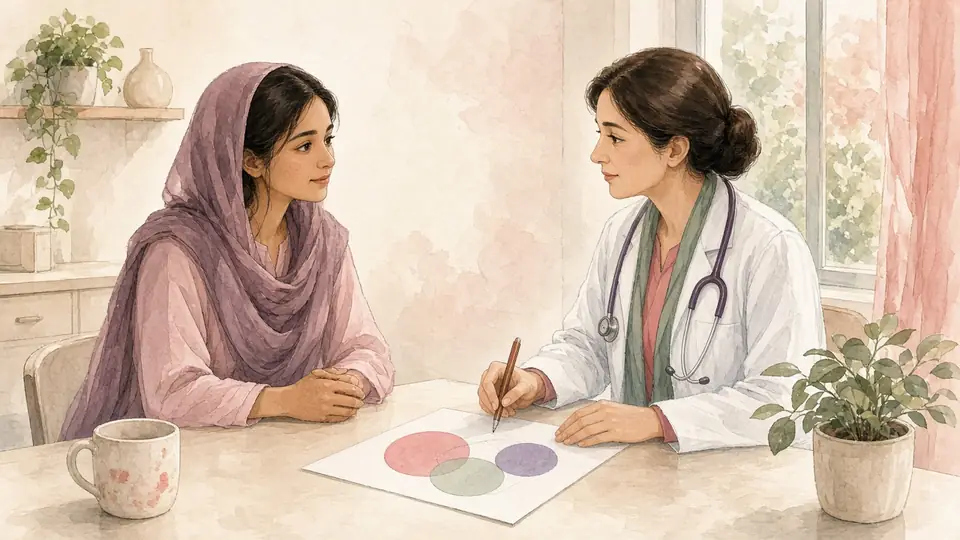
- Diagnosis needs two of three features: irregular ovulation, signs of high androgens (male-type hormones), and polycystic ovaries on ultrasound (or a high AMH blood test in adults), after other causes are ruled out.
- There's no permanent cure, but PCOS is very manageable. Lifestyle changes, medicines for specific symptoms, and fertility treatment if needed all work well.
"Doctor ne kaha ovaries mein cysts hain." Many women in Pakistan hear the word PCOS for the first time this way, often in a rushed appointment, with a list of medicines and a warning to "lose weight", but little explanation. It's no surprise that PCOS causes so much worry, and so many myths.
This guide explains what PCOS actually is, how it's diagnosed, and what can be done about it, in plain language.
What is PCOS?
Polycystic ovary syndrome (PCOS) is a common hormonal condition that affects how the ovaries work. It typically involves:
- Irregular ovulation. The ovaries don't release an egg regularly, so periods become irregular or stop.
- Higher levels of androgens, sometimes called "male hormones", which all women have in small amounts. Higher levels can cause acne, extra hair growth and scalp hair thinning.
- Polycystic ovaries. On ultrasound, the ovaries may contain many small follicles (partly developed egg sacs).
Despite the name, women with PCOS don't have true cysts that need removing. The "cysts" are follicles that didn't mature and release an egg.
A new name: PMOS
In May 2026, after a global consensus process involving more than 50 patient and professional organisations, the condition was given a new name: polyendocrine metabolic ovarian syndrome (PMOS). The new name reflects that this is a long-term hormonal and metabolic condition, not a problem of ovarian cysts. Both names will be used during a three-year transition, so your doctor, ultrasound report or lab report may still say PCOS. The diagnosis and treatment haven't changed. We still use "PCOS" on this site because it's the name most women in Pakistan know and search for.
Insulin resistance is common in PCOS, whatever your weight. It means your body needs more insulin to control blood sugar, and high insulin levels can push the ovaries to make more androgens.
How common is PCOS?
The WHO estimates PCOS affects 10–13% of women of reproductive age worldwide, and that up to 70% of women with PCOS are undiagnosed. Studies suggest it may be at least as common in South Asian women, who also tend to develop insulin resistance and type 2 diabetes earlier.
What causes PCOS?
The exact cause isn't known. It's thought to result from a mix of:
- Genetics. PCOS often runs in families.
- Insulin resistance.
- Hormonal signals from the brain and ovaries.
PCOS is not caused by anything you did, and it isn't caused by eating "garam" foods, "kamzori", or nazar.
Common symptoms
Symptoms usually start around the late teens or early twenties, but they vary widely:
- Irregular periods: cycles longer than 35 days, fewer than 8 periods a year, or no periods at all
- Heavy periods when they do come
- Excess hair growth (hirsutism) on the face, chin, chest, stomach or back
- Acne, often on the jawline, that persists beyond the teenage years
- Thinning hair on the scalp
- Weight gain, especially around the belly, and difficulty losing weight
- Darkened skin patches (acanthosis nigricans) on the neck, armpits or groin
- Difficulty getting pregnant, due to irregular ovulation
- Low mood, anxiety and poor body image
Not everyone with PCOS is overweight. "Lean PCOS" is common too.
How is PCOS diagnosed?
In adults, the 2023 International Evidence-based Guideline for PCOS uses the Rotterdam criteria: you need at least two of these three:
- Irregular cycles or no ovulation
- Signs of high androgens: either symptoms (such as hirsutism or acne) or a blood test
- Polycystic ovaries on ultrasound, or, in adults, a raised AMH (anti-Müllerian hormone) blood test
And other conditions with similar symptoms must be ruled out, such as thyroid problems, high prolactin and, rarely, adrenal conditions.
Your doctor may order:
- Blood tests: thyroid (TSH), prolactin, testosterone and sometimes others
- Pregnancy test if your period is late
- Pelvic ultrasound
- Sugar and cholesterol tests, because PCOS raises the risk of diabetes
A note for teenagers
In girls within 8 years of their first period, irregular cycles are common and normal. Guidelines advise not using ultrasound to diagnose PCOS at this age. Diagnosis relies on cycles and androgen signs, and some girls are labelled "at risk" and re-checked later.
Treatment: what actually helps
There's no one-size-fits-all treatment. It depends on your symptoms and goals.
1. Lifestyle (the foundation)
- Healthy eating. There's no single "PCOS diet", but balanced meals with fewer refined carbohydrates and sugary drinks help. See our PCOS diet plan with Pakistani food.
- Regular activity: at least 150 minutes a week of moderate exercise, plus muscle strengthening on 2 days.
- Weight: if you're overweight, losing 5–10% of your body weight can make periods more regular, improve insulin resistance and increase the chance of ovulation.
- Sleep and stress: both affect hormones and appetite.
2. Medicines for specific symptoms
Your doctor may suggest:
- Combined hormonal contraceptive pills to regulate periods, protect the womb lining and reduce acne and hair growth
- Metformin to improve insulin resistance and help with weight and cycle regularity in some women
- Anti-androgen medicines for hair growth or acne in specific cases, with reliable contraception
- Skin treatments for acne, and hair removal methods such as laser for facial hair (see our facial hair and hirsutism guide for every option compared)
These are prescription treatments. Discuss benefits and side effects with your doctor, and don't take hormones bought without a prescription.
3. Protecting the womb lining
If you have very few periods (fewer than about four a year), the womb lining can build up over time, which slightly raises the risk of endometrial problems. Your doctor may recommend regular hormonal treatment to cause a bleed.
4. Fertility treatment
Many women with PCOS get pregnant naturally or with simple treatment. For women who need help ovulating, guidelines recommend letrozole as the first-line tablet. Read PCOS and pregnancy.
Long-term health
PCOS isn't only about periods. It raises the risk of:
- Type 2 diabetes and gestational diabetes
- High cholesterol and blood pressure
- Sleep apnoea
- Depression and anxiety
- Endometrial problems if periods are very infrequent
Regular check-ups, including sugar tests every few years, help catch problems early.
Myths about PCOS
- "PCOS means you can't have children." False. Many women with PCOS have children, some with treatment.
- "Shaadi kar lo, PCOS theek ho jayega." Marriage doesn't treat PCOS.
- "Only overweight women get PCOS." False. Lean women can have PCOS.
- "The cysts must be removed by surgery." No. PCOS follicles aren't cysts that need removing.
- "Herbal nuskhay can cure PCOS." There's no cure, and some products are unsafe or interact with medicines.
See a doctor promptly if
- Your periods come less often than every 35 days, have stopped for 3 months or more (and you're not pregnant), or are very heavy.
- You notice fast-growing facial or body hair, a deepening voice or other sudden changes. These need prompt checks.
- You've been trying to get pregnant for 12 months (or 6 months if you're over 35), or sooner if your periods are irregular.
Frequently asked questions
Has PCOS been renamed?
Yes. In May 2026 an international consensus renamed it polyendocrine metabolic ovarian syndrome (PMOS). Both names will be used for a few years, and diagnosis and treatment are unchanged.
Can PCOS be cured permanently?
There's no permanent cure, but symptoms can be well controlled with lifestyle changes and treatment. Some women find symptoms improve with weight loss or after menopause.
Can I get pregnant with PCOS?
Yes. Many women with PCOS conceive naturally, and treatments to help ovulation, such as letrozole, are effective for many others.
What is the best treatment for PCOS?
It depends on your symptoms and goals. Lifestyle changes help everyone. Hormonal pills help regulate periods and reduce acne and hair growth, metformin helps insulin resistance, and letrozole helps ovulation for women trying to conceive.
Does PCOS cause weight gain?
PCOS and insulin resistance can make it easier to gain weight, especially around the belly, and harder to lose it. Weight loss is possible, and even modest loss improves symptoms.
Which doctor should I see for PCOS?
A gynaecologist is a good starting point. Some women also see an endocrinologist, dermatologist or dietitian, depending on their symptoms.
Sources
- World Health Organization. Polycystic ovary syndrome fact sheet.
- Teede HJ, et al. Recommendations from the 2023 International Evidence-based Guideline for the Assessment and Management of Polycystic Ovary Syndrome. 2023.
- NHS. Polyendocrine metabolic ovarian syndrome (PMOS), previously called PCOS.
- Endocrine Society. Polyendocrine metabolic ovarian syndrome: new name for PCOS. May 2026.
- MedlinePlus. Polycystic ovary syndrome.
- Eunice Kennedy Shriver National Institute of Child Health and Human Development (NIH). Polycystic ovary syndrome (PCOS).
Sources were checked on 26 November 2026. Found an error? Tell us and we will correct it.
Medical disclaimer: This article is general information, not a diagnosis or treatment plan. Please talk to a qualified doctor about your own situation. Read our full disclaimer.
Saheli ki weekly sehat tips
One short, private email a week on periods, PCOS and women's health. Free, no spam.
We only use your email to send this newsletter and never share it. Unsubscribe anytime, every email has a one-click link. Privacy policy
Shukriya! You're subscribed. Pehli email jald aayegi.
Something went wrong. Please check your email address and try again.